Commercial Roofing | Roofing Contractor
Durable single-ply TPO, EPDM, and modified bitumen roofing solutions engineered for flat and low-slope retail, industrial, and commercial properties.
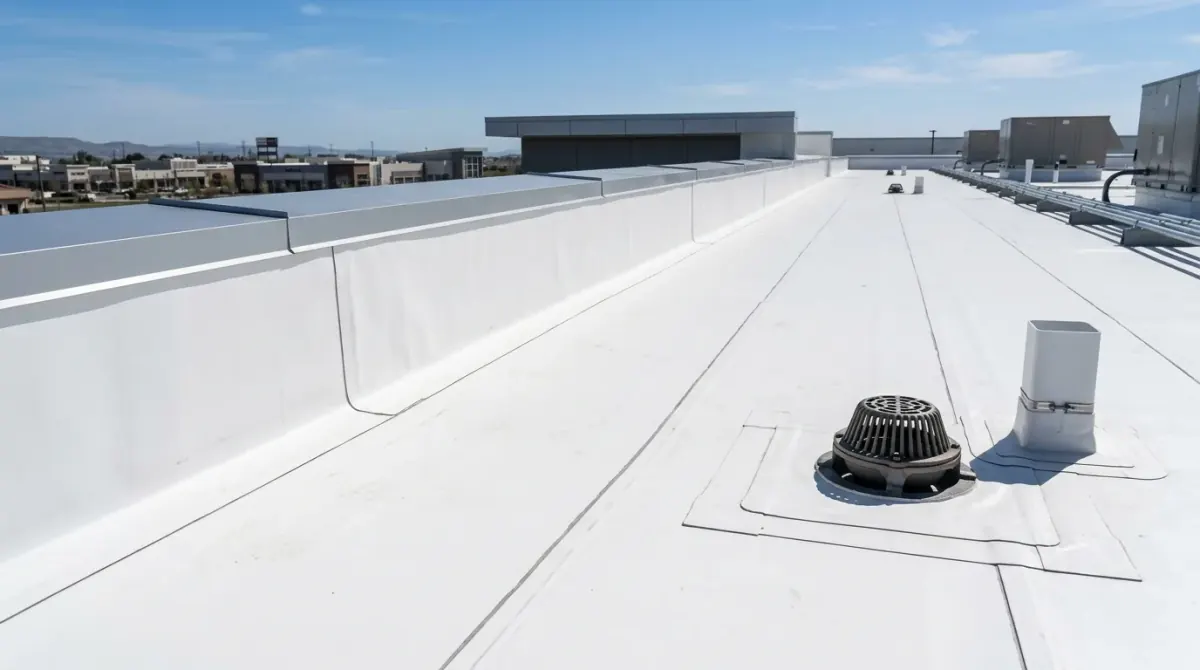
Technical Workmanship & System Scope
Flat and low-slope commercial roofs demand specialized watertight membranes engineered to withstand standing water, extreme ultraviolet exposure, and mechanical rooftop equipment traffic. We install heavy-gauge thermoplastic polyolefin (TPO) and ethylene propylene diene monomer (EPDM) systems featuring robotically heat-welded seams and high-density polyisocyanurate insulation boards. Technicians expertly flash rooftop HVAC curbs, parapet walls, and internal scupper drains to prevent costly water intrusion into commercial inventory and office space. Routine preventive commercial maintenance programs and restorative silicone coatings extend the service life of existing flat roof systems without disrupting daily business operations.
Engineering Standards & Installation Specifics
Heat-Welded TPO Membranes
Robotically welded single-ply seams create a continuous monolithic waterproof envelope impervious to standing water.
Rooftop HVAC Curb Flashing
Heavy-duty termination bars, polyurethane sealants, and custom counter-flashing seal critical equipment penetrations.
Polyiso Insulation Upgrades
High-density rigid polyisocyanurate boards increase building thermal R-value and eliminate thermal bridging.
Restorative Silicone Coatings
Seamless elastomeric roof coatings reflect 85 percent of UV rays and postpone total tear-off projects by up to 15 years.
Direct Scheduling Assistance
Speaking with a dispatch coordinator immediately clarifies scheduling availability, scope requirements, and material availability for your property.
Connect at 877-773-6880 →Frequently Asked Questions About Commercial Roofing
Which roofing membrane works best for flat and low-slope commercial properties? +
Thermoplastic polyolefin (TPO) single-ply membranes offer exceptional resistance to ponding water, ultraviolet breakdown, and chemical exhaust. Heat-welded seams fuse sheets into a monolithic barrier stronger than the membrane itself.
Ponding water puddles: how does standing rain damage commercial flat roofs? +
Standing water remaining on a flat roof for longer than 48 hours accelerates membrane degradation and strains structural roof decking. Ponding water often signals clogged scuppers, sagging purlins, or inadequate internal drain slope.
Business continuity: can commercial roofing work proceed during normal retail hours? +
Roof mechanics work quietly on rooftop perimeters using safety flags and ground barricades to ensure zero disruption to retail shoppers or office tenants below. Odor-free mechanical fasteners and heat-welding techniques eliminate harsh asphalt fumes.
How often should commercial building managers schedule professional roof inspections? +
Commercial roofs require thorough bi-annual inspections each spring and autumn, plus post-severe storm assessments. Checking parapet counter-flashing, rooftop HVAC curb seals, and drain strainer baskets catches minor defects before inventory gets ruined.
TPO versus EPDM: what is the service life difference between common commercial membranes? +
Properly installed TPO membranes typically last 20 to 30 years, while durable EPDM rubber sheets routinely exceed 25 to 30 years. Multi-ply modified bitumen systems generally provide 15 to 20 years of robust protection against heavy rooftop foot traffic.
Restorative coatings: how do liquid silicone systems extend commercial roof life? +
Seamless liquid-applied silicone creates an elastomeric moisture barrier directly over structurally sound existing membranes. Reflecting 85 percent of solar rays lowers cooling loads and postpones costly complete roof tear-offs by 10 to 15 years.
Parapet walls and equipment curbs: why do roof perimeters leak before the main membrane? +
Heavy rooftop equipment vibrations and wind uplift forces concentrate mechanical stress along equipment curbs and vertical wall seams. Technicians install heavy-duty termination bars, polyurethane sealants, and custom metal counter-flashing around all penetrations.
Does replacing commercial roof insulation improve building energy efficiency? +
Upgrading to high-density polyisocyanurate (polyiso) rigid insulation boards significantly increases rooftop R-values. Tightly staggered insulation seams eliminate thermal bridging, drastically reducing heating and air conditioning operational utility costs.
Protect Your Property Envelope With Professional Roofing Care
Contact our Roofing Contractor dispatch line for immediate answers regarding commercial roofing costs, scheduling, and structural solutions.